Supply Lines
Broken plumbing lines, fittings, valves, and connected fixtures.

Burst & Frozen Pipe Claims
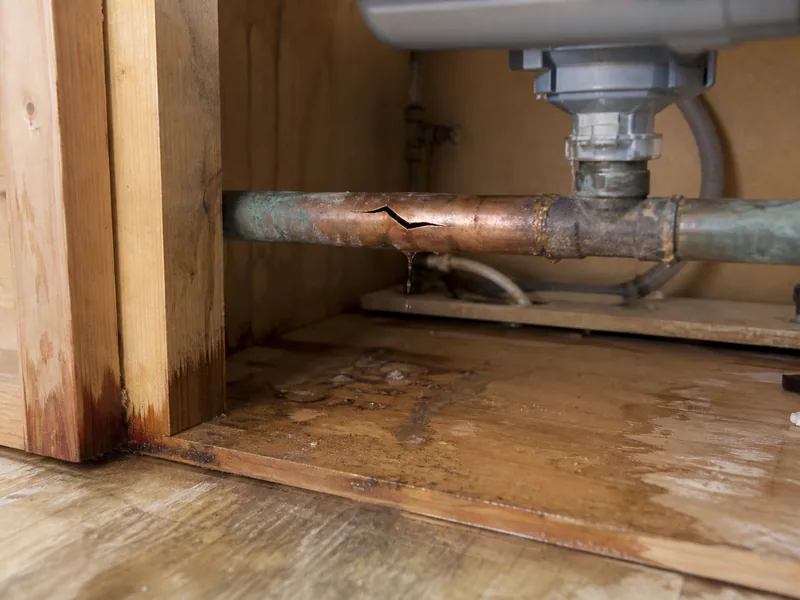
A broken supply line or frozen pipe can release water across several rooms or floors in minutes. We help document the pipe event, resulting damage, emergency work, and repair scope under the policy.
Understand the Full Loss
Stopping the water and beginning reasonable mitigation come first. The claim record then needs to show where the break occurred, when it was discovered, what materials became wet, and what was removed during cleanup.
Policies may distinguish the failed pipe itself from the resulting water damage. We document both while leaving coverage decisions to the policy and claim facts.
See how our public adjuster services work Damage Scope
Broken plumbing lines, fittings, valves, and connected fixtures.
Water-damaged drywall, insulation, lighting, and framing below the release.
Wet cavities, trim, plaster, drywall, and insulation.
Damaged finish flooring, underlayment, subfloor, and transitions.
Swollen boxes, doors, panels, countertops, and nearby finishes.
A release that travels vertically through several rooms or units.
Policyholder Support
We help turn the observed burst pipe damage into an organized claim file. The work is evidence-based and tied to the policy; it does not guarantee coverage or a particular payment.
Build the Record
Every useful record should connect to the damaged property, repair need, or applicable claim expense.
How We Work
Each claim is different. These steps keep the burst pipe damage claim documentation and communication organized.
Tell us what happened. We review your claim and your policy at no cost and with no obligation.
We inspect the property and document the full extent of the damage.
We organize estimates, documentation, inventories, and supporting evidence.
We communicate and negotiate with the insurance company on your behalf.
We work toward a fair settlement based on your documented loss and your policy.
Existing Claim Questions
The plumbing repair and resulting property damage may be evaluated separately.
Water in cavities or under flooring may not appear in the first estimate.
Vertical water travel can create separate scopes on each level.
Emergency drying and demolition charges may be disputed.
Continuous floors, cabinets, or finishes may raise matching questions.
The repair estimate may omit affected rooms or assemblies.
Already received a decision or payment? Review our denied and underpaid claim help.
Why Property Owners Call
Our role is to prepare and present the policyholder's property claim.
Service is centered on residential and commercial claims throughout the state.
We connect conditions, measurements, estimates, and records to the claimed loss.
We keep the documentation and insurer correspondence organized through the process.
Statewide Service
Explore city-specific claim help or contact us if your community is not listed.
View all New Jersey service areasQuestions From Property Owners
Answers are general. Coverage, deadlines, and claim options depend on the policy and facts.
Shut off the water if it is safe, protect people from electrical or structural hazards, notify the insurer, and document conditions before cleanup changes them.
Reasonable steps to protect the property generally should not wait. Keep photographs, agreements, invoices, drying logs, and records of removed materials.
Yes. We can help document the break, resulting water damage, mitigation, and repair scope. Coverage depends on the policy and circumstances.
Each level and room should be inspected and documented, including concealed areas where water may have traveled.
Keep photographs, videos, plumber reports, mitigation records, invoices, estimates, damaged-item lists, and insurer communications.
Yes. We can compare the existing estimate with documented conditions and identify items that may need additional support.
Free Consultation • No Obligation
Tell us what happened and where the claim stands. We’ll explain how a public adjuster may be able to help.